
Oregon Issues
Results Over Rhetoric: The End of the Career Politician and Dr. Kahls Promise to Only Serve Two Terms
What a Two Term Promise can—and cannot—do
A Two Term Promise is a voluntary commitment by a candidate; it does not change the constitutional qualifications for Congress or create a binding term-limit law. Its value therefore depends on visible conduct. Voters should be able to compare the commitment with dated votes, public disclosures, constituent service, attendance, and progress on stated priorities.
The practical standard is straightforward: publish a short set of measurable goals, explain each major vote in plain language, disclose meetings and financial conflicts where the law permits, and report progress at regular intervals. If a goal changes, the representative should explain why, identify the evidence behind the change, and give voters a new deadline.
A two-term commitment also cannot replace institutional reform. Congress still needs transparent budgeting, enforceable ethics rules, effective oversight, and competitive elections. The promise can, however, give voters an additional accountability clock. It asks a representative to build durable results, strengthen capable staff, and leave a usable public record instead of treating reelection as the only measure of success.
For Oregon District 1, the fairest test is not whether every disagreement disappears. It is whether residents across coastal, rural, suburban, and urban communities can see what was promised, what was delivered, what remains unfinished, and who is responsible.
Two term promise: what the commitment means and how to track it
- Publish the exact commitment
- A House term lasts two years
- Voluntary pledges are not legal term limits
- Changes in district lines do not erase the record
- Seven accountability tests
- Arguments in favor of a voluntary limit
- Arguments against a voluntary limit
- Track service separately from performance
- A transparent update policy
- Primary and authoritative sources
The existing article describes Barbara Kahl’s two term promise as a voluntary commitment concerning service in the U.S. House of Representatives. It is not a statute, constitutional restriction, or binding limit on other officeholders. A credible accountability page must preserve the exact dated statement and define what counts as a term.
Members of the House serve two-year terms, as explained by the U.S. House’s official overview. Voters choose representatives at regular elections, and the Constitution establishes the structure of the chamber. A candidate pledge operates within that system as a personal undertaking rather than a change to eligibility law.
Publish the exact commitment
The first accountability test is documentary. The page should reproduce or link to a dated primary statement, identify the office covered, and preserve the wording that was in effect when the commitment was made. A paraphrase such as ‘term limits’ is not precise enough if the original statement addresses only House service.
The record should also say whether the commitment covers two elected terms, any partial term filled after a vacancy, total congressional service, or only consecutive service. If the original statement does not answer those questions, the article should label them unresolved rather than inventing an interpretation.
A House term lasts two years
A normal House term begins and ends according to the constitutional and statutory election calendar. Winning reelection starts another term; it does not extend the first one. The official House resource is the appropriate reference for the chamber’s basic structure, while the Constitution Annotated discussion of Article I supplies the constitutional foundation.
The page should avoid translating two terms into a guaranteed number of years without qualification. A resignation, death, delayed seating, vacancy appointment rules, or other interruption could make actual service shorter than two complete terms. The commitment needs a rule for partial service if that situation matters.
Voluntary pledges are not legal term limits
A voluntary service limit depends on the officeholder keeping it and on voters evaluating the record. Constitutional term limits would change eligibility rules for everyone covered and would require a different legal process. The two ideas may share a concern about long tenure, but they should never be described as the same mechanism.
Because the pledge is personal, it does not prevent another candidate from seeking additional terms, cancel an election, or remove the electorate’s constitutional role. Nor does it automatically become enforceable through a campaign website. The accurate remedy for breach is political accountability unless a separately applicable legal rule governs the conduct.
Changes in district lines do not erase the record
Congressional boundaries can change after redistricting, and a member may represent a district whose shape differs from the one in which the first election occurred. A transparent pledge record should explain whether service is counted by chamber, district number, or geography. Counting House terms by service in the chamber is usually easier for the public to verify, but the published statement controls.
Election timing may also create edge cases. A special election can fill an unexpired term, and a regular election can follow soon afterward. The page should state whether partial service counts as one of the promised terms and should update the timeline if such an event occurs.
Seven accountability tests
First, preserve the dated primary statement. Second, define the office. Third, define a term and partial service. Fourth, list election and service dates. Fifth, record any clarification without deleting the earlier version. Sixth, separate the pledge from broader advocacy for constitutional limits. Seventh, publish whether the commitment was fulfilled after service ends.
These tests turn a slogan into a record that readers can inspect. They also prevent a later article from quietly changing the scope, moving the starting date, or treating a personal decision as if Congress had enacted a universal rule.
Arguments in favor of a voluntary limit
Supporters may view a self-imposed limit as evidence that the candidate sees office as temporary service. They may also believe a known endpoint discourages careerism, makes succession planning visible, and creates a simple promise that can be evaluated without waiting for a constitutional amendment.
Those arguments are values and predictions, not proven outcomes. The page should not claim that a shorter tenure automatically produces independence, efficiency, ethical conduct, or better votes. Those qualities require separate evidence from the officeholder’s actions.
Arguments against a voluntary limit
Critics may argue that a limit reduces voter choice, gives up accumulated knowledge, or shifts influence toward unelected staff, agencies, lobbyists, and longer-serving legislators. They may also question whether a promise made before taking office can account for an emergency or unfinished constituent work.
A neutral explainer should present those objections without suggesting that they excuse an undisclosed reversal. If a candidate later seeks to revise the commitment, accountability requires a dated explanation and retention of the original record so readers can compare both statements.
Track service separately from performance
Keeping the duration commitment is one measure. Legislative attendance, votes, constituent service, oversight, disclosures, and budget work are different measures. A member could honor a service limit while performing poorly, or serve longer while maintaining a strong record. The page should not use one metric as a substitute for all others.
Related articles on public-service stewardship and congressional budget accountability can address those other dimensions. Cross-links should provide context, not repeat candidate promotion.
A transparent update policy
The record should show the statement date, verification date, election dates, term start and end dates, and any interruption or clarification. Archived versions should remain accessible. If the pledge has not yet reached a testable milestone, say so plainly instead of labeling it fulfilled in advance.
The source note should distinguish official constitutional and House information from the candidate’s own statement. Government sources establish how House terms work; only a dated candidate source can establish the scope of this particular commitment.
The two term promise can be evaluated fairly only when its exact wording, scope, dates, and edge cases are public. Treating it as a voluntary candidate commitment—separate from legal term limits—gives District 1 readers a clear standard for checking whether the record matches the statement.
Primary and authoritative sources
Editorial note: This explainer summarizes public sources and distinguishes verified facts from proposals and commentary.
Two term promise: scope, law, and public accountability
A two term promise is a voluntary commitment about length of service. For a member of the U.S. House, two full terms ordinarily equal four years because representatives are elected every two years. The commitment does not alter the Constitution, create a new qualification for office, or automatically prevent later service. Its meaning depends on the words used when the commitment is made and on a dated record that preserves those words.
This distinction matters because a personal pledge and congressional term limits are different policy tools. A pledge concerns one officeholder’s intended conduct. Mandatory term limits would change who may continue to serve after a specified period. The first can be stated and tracked without changing federal law. The second raises constitutional questions and, under current Supreme Court doctrine, would require the federal constitutional amendment process.
The constitutional baseline
Article I, Section 2 establishes the two-year House election cycle and lists age, citizenship, and state-inhabitancy qualifications. It contains no House term limit. The House’s official overview likewise states that each representative is elected to a two-year term. That cycle creates frequent elections, but repeated eligibility is not capped by the present constitutional text.
Constitution Annotated summarizes U.S. Term Limits, Inc. v. Thornton, the 1995 Supreme Court decision involving state-imposed congressional limits. The Court held that states may not add qualifications for membership in Congress beyond those fixed in the Constitution. The same source explains that neither an ordinary state law nor an ordinary federal law can add such a qualification. A change must proceed through Article V.
Article V provides two methods for proposing amendments and requires ratification by three-fourths of the states. Congress may propose an amendment when two-thirds of both chambers agree, or a convention may be called after applications from two-thirds of state legislatures. These thresholds explain why a proposal for national congressional term limits appears as a joint resolution proposing an amendment rather than as a normal bill.
H.J.Res.5 in the 119th Congress illustrates that route. Congress.gov describes a proposal for six House terms and two Senate terms, with specified transition language. As of August 20, 2026, its public action history shows referral to the House Judiciary Committee and does not show adoption or ratification. Its existence documents an ongoing proposal; it does not establish current congressional term limits.
Defining a two term promise precisely
A usable two term promise begins with a dated statement and an unambiguous unit of measurement. “Two elected House terms” is more precise than “a few years” or “limited service.” The statement can also identify the office covered. Service in a state legislature, local office, the House, and the Senate involves different terms and should not be combined unless the commitment expressly combines them.
The record should address partial service. A person might enter office after a special election, leave before a term ends, or serve during an unusual interruption. None of those situations should be assigned an answer after the fact. The original two term promise can define whether any portion of a House term counts, whether only a completed term counts, or whether a time-based ceiling applies regardless of election history.
Nonconsecutive service is another scope question. A pledge might mean no more than two terms in a lifetime, or it might mean no more than two consecutive terms before a break. Those are materially different commitments. The source record should use one formulation, not alternate between them. If the original words are unclear, a later clarification should be dated and displayed alongside the original rather than substituted for it.
Redistricting does not by itself create a new House office for purposes of time served. District numbers and boundaries can change after the census or litigation while a member’s constitutional term continues. A two term promise can say explicitly that the service clock follows the person and chamber, not the district label. That prevents a map change from becoming an unannounced reset.
The start and end points also require definition. House terms normally begin and end according to constitutional and statutory schedules, while election dates, certification, and the oath are separate events. A documentary approach can identify the official term dates and avoid treating an announcement, filing, primary, general election, or swearing-in ceremony as interchangeable.
What the pledge can and cannot enforce
A two term promise is not a statute, judicial order, employment contract, or automatic ballot restriction. It does not authorize an election official to remove an otherwise qualified person from a federal ballot. It also does not empower the House to add a new qualification when judging whether a member-elect meets the constitutional requirements. Those legal boundaries are separate from any reputational consequences attached to changing a voluntary commitment.
Constitution Annotated also discusses a later Supreme Court decision invalidating state ballot labels aimed at congressional candidates who declined to support term limits. That history reinforces the difference between publishing accurate facts and using state machinery to impose an additional electoral burden. A neutral record may show what was said and what later occurred without claiming that the pledge has the force of law.
Private organizations sometimes publish pledge forms, ratings, or scorecards. Those materials may document a statement, but they are not official legal determinations. The strongest source for a two term promise is the original signed or recorded statement, preserved with a date, full context, and stable archive. Commentary should be separated from that primary record so later summaries cannot quietly expand or narrow the commitment.
A five-part accountability record
1. Preserve the source. The original two term promise should remain available in the form in which it was made, whether a signed document, complete video, transcript, or official written statement. A short excerpt can omit conditions or definitions. The archive should therefore retain the full item, publication date, and any version history.
2. Maintain the service clock. A simple timeline can list the beginning and end of each House term, any interruption, and the rule used for partial service. The timeline should cite official election and House records. It should not change because political control, district boundaries, committee assignments, or personal plans change.
3. Separate service length from job performance. A pledge answers how long a person intends to serve; it does not prove whether the service was effective. Performance records can include introduced measures, committee work, oversight activity, roll-call decisions, and publicly reportable office operations. Each category has limitations and should be described without turning a count into a claim of causation.
4. Preserve changes instead of overwriting them. If the pledge maker later interprets a partial term differently or revises the commitment, the revision should carry its own date and explanation. The original two term promise remains part of the record. Side-by-side versions make the history visible and reduce disputes about whether language was altered retroactively.
5. Publish a closeout record. Before the stated service period ends, a neutral closeout can identify completed work, unfinished matters, records transferred to archives, and information that remains available to the public. It should distinguish office records that may be disclosed from confidential constituent casework, personnel information, security material, and other protected data.
Using official records without overstating them
The Office of the Clerk publishes House roll-call records and member information. Congress.gov publishes legislative actions, sponsorship, committee referrals, and other bill data. These records can verify that an action occurred, but they do not always reveal private negotiations, the quality of an amendment, or an individual member’s causal influence on a broad result. A count needs context.
Financial disclosure reports are another public source. They can show reportable ranges, positions, agreements, gifts, or transactions under applicable rules, but they are not a complete balance sheet and should not be described as one. An accountability page can link the official disclosure repository, note the reporting period, and avoid speculative conclusions that the form itself does not support.
Attendance claims also require care. A missed roll call is not always the same as absence from all official work, and a high number of recorded decisions does not measure preparation or outcome quality. Committee hearings, written questions, amendments, district work periods, and constituent services use different records. The fairest presentation identifies the source and what the measure can and cannot show.
Constituent service is especially difficult to quantify publicly because case files can contain private information. Aggregate measures may be possible, such as number of cases opened or average processing time, but they should include definitions and privacy safeguards. A two term promise does not justify releasing personal records or inventing a success rate from incomplete data.
Arguments for and against fixed service periods
Supporters of term limits commonly argue that rotation can broaden access to office, reduce incentives tied to permanent reelection, and create predictable turnover. A voluntary two term promise may be presented as an individual experiment with those ideas. Because it applies to one person’s conduct, however, it cannot demonstrate how a nationwide constitutional rule would affect every chamber, committee, state, or election.
Critics commonly emphasize voter choice, institutional knowledge, policy expertise, and continuity in oversight. They also raise the possibility that rapid turnover can shift influence toward long-serving staff, executive agencies, lobbyists, or outside organizations. These arguments do not establish that unlimited service is always preferable; they identify tradeoffs that simple seniority counts cannot resolve.
The Congressional Research Service distinguishes legal mechanisms and policy consequences. Its reports discuss constitutional doctrine, past proposals, and arguments on both sides. That framework supports a neutral comparison: voluntary pledges rely on self-limitation and public documentation, while mandatory congressional term limits require a rule that applies beyond one officeholder and survives constitutional adoption.
What would constitute a legal change
A press release, party rule, private pledge, or House resolution cannot by itself create constitutional congressional term limits. A legally binding national eligibility limit would need to follow Article V under the doctrine summarized by Constitution Annotated. The amendment text would also need to define House and Senate limits, partial terms, prior service, effective dates, and any transitional treatment.
Even a proposed amendment is not law merely because it has been introduced. Congress.gov action history distinguishes introduction, committee referral, chamber action, transmission to states, and ratification. A current-status article should identify the latest completed step and date. Language such as “proposed,” “approved by one chamber,” and “ratified” should not be treated as synonyms.
A durable update standard
This topic should be reviewed at least when a new Congress begins, when the service clock changes, when the pledge maker publishes a clarification, or when a relevant court or constitutional action occurs. The update line should state what changed. Routine editing for style should not alter the quoted scope of the two term promise or erase earlier versions.
A reliable summary keeps three questions separate: What exactly was promised? What does current law require? What does the documented service record show? Keeping those questions distinct makes the page useful without presenting a voluntary commitment as mandatory term limits, or presenting a legal proposal as an enacted rule.
Official source record
- U.S. House, The House Explained — House composition and two-year terms.
- Constitution Annotated, Article I, Section 2 — House elections and qualifications.
- Constitution Annotated, ability of states to add qualifications — Thornton and related doctrine.
- Constitution Annotated, Article V — amendment proposal and ratification process.
- Congressional Research Service, Term Limits for Members of Congress — policy and legal overview.
- Congress.gov, H.J.Res.5 — proposal text, summary, and action history.
- Office of the Clerk, House roll-call records — official recorded decisions.
- Office of the Clerk, financial disclosures — official disclosure repository.
Serving Oregon’s 1st Congressional District
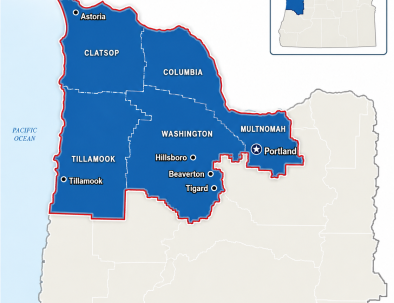
Oregon’s 1st Congressional District includes Clatsop County, Columbia County, Tillamook County, most of Washington County, and part of Multnomah County, including Portland’s west side.
These priorities affect Hillsboro, Beaverton, Tigard, Forest Grove, Astoria, Warrenton, Seaside, Tillamook, St. Helens, Scappoose, Vernonia, Rainier, Clatskanie, west Portland, and communities across northwest Oregon.
Related visual context
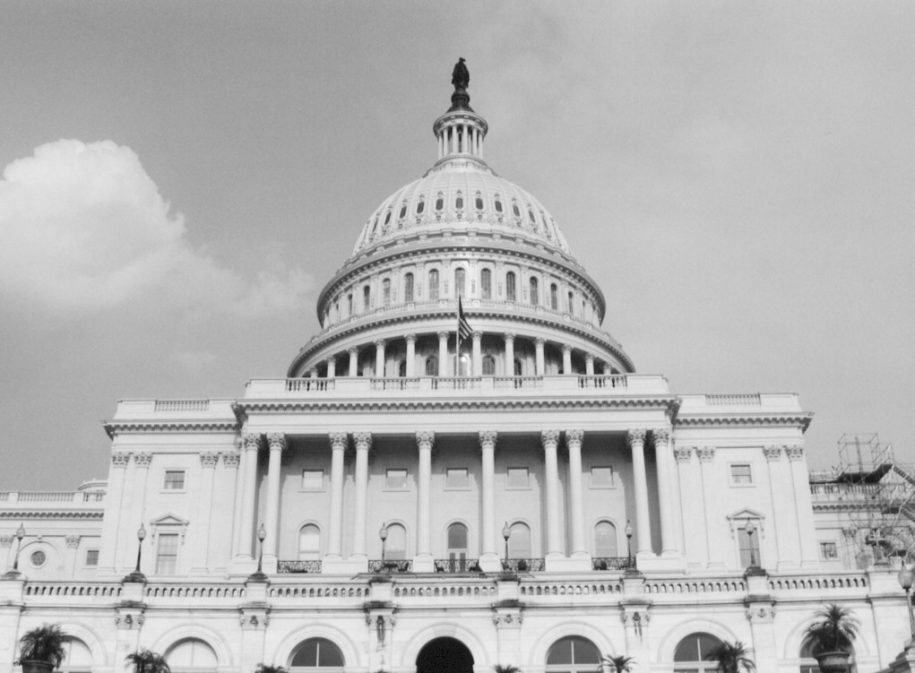
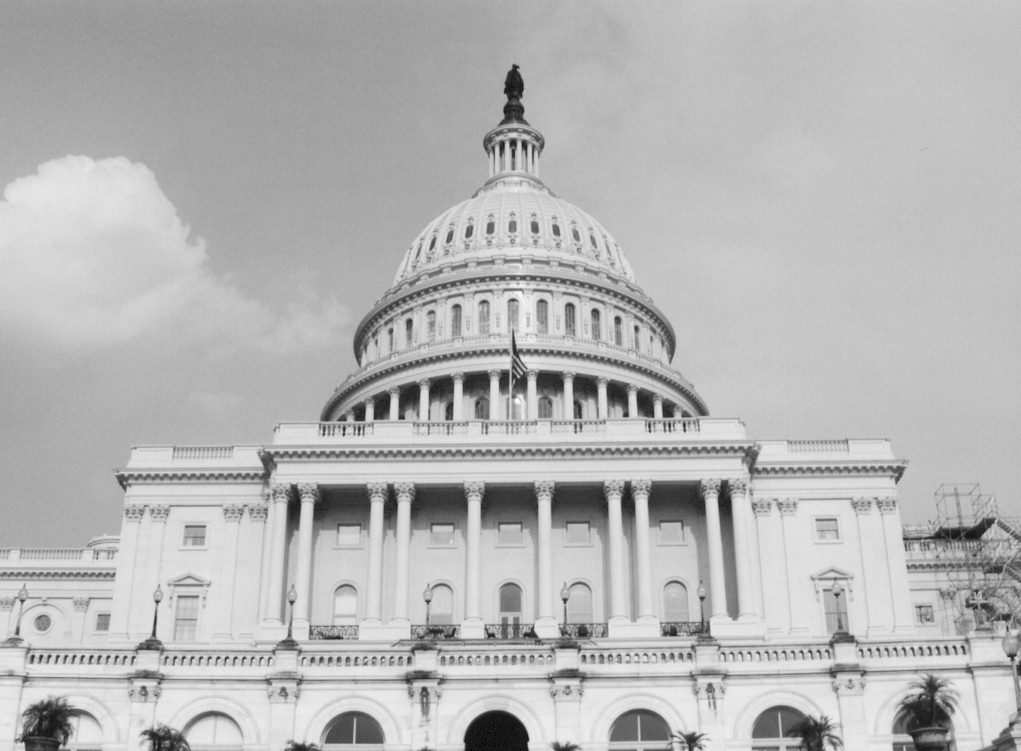
Source-credited images connected to the article’s policy, geography, or public-accountability themes.