
Oregon Back-to-School Guide 2026 • Updated August 20, 2026
Oregon Back-to-School Guide 2026: What District 1 Parents Need to Know
Back-to-school season arrives on different dates across Northwest Oregon, but the questions waiting at the kitchen table are much the same: Is my child learning? Does my child feel safe? Is the help promised to students actually reaching them?
In Oregon’s 1st Congressional District, the 2026–27 school year begins in late August and early September. Beaverton’s first student day is August 25. Astoria begins August 31 with elementary conferences and middle- and high-school orientation. Hillsboro phases students in September 1–2. Every family should verify dates with its own district.
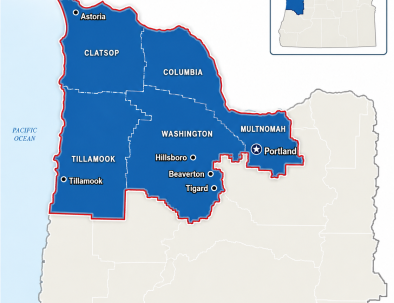
Oregon’s 1st Congressional District includes all of Clatsop, Columbia and Tillamook counties, plus portions of Washington and Multnomah counties. Its geography is broad: Astoria, Seaside and Tillamook on the North Coast; St. Helens, Scappoose and communities along the Columbia River; Hillsboro, Forest Grove and parts of Beaverton and Portland. Families in these places do not face identical school challenges. They do share an interest in strong academic basics, safe classrooms, useful career pathways and public dollars that produce visible results.
This is where political promises need a dose of honesty. A member of Congress does not run Oregon’s local schools. Barbara Kahl could not choose a textbook for a Beaverton classroom, rewrite Astoria’s graduation requirements or dismiss a Hillsboro superintendent.
Congress has a different and still important role: it writes federal law, appropriates education funding, sets conditions for federal grants and oversees the agencies administering programs such as Title I, special education under IDEA and career and technical education under the Perkins Act.
This independent supporter site believes Dr. Kahl should carry a practical, results-first education agenda to Washington—one that protects bottom-up leadership, treats parents as partners and requires the federal government to show what its money accomplished.
Local communities should direct their schools. Washington should be accountable for Washington’s money.
Oregon Back-to-School Guide 2026: Before the First Bell
A strong school year often begins with ordinary steps taken before a small problem grows into a crisis. Parents and guardians should confirm the basics directly with their school:
- The official first day, orientation schedule and dismissal time
- Bus routes or other transportation arrangements
- Emergency contacts and authorized pickup information
- Parent-portal access and attendance notifications
- Medication forms and school health instructions
- IEP or 504 contacts and meeting dates, when applicable
- After-school plans, school-supply guidance and meal information
- Phone rules and the best way to reach each teacher
Then establish one routine that can survive a busy week: a ten-minute daily check-in. Ask for one good part of the day, one difficult part and one thing your child needs from you. Once a week, look at attendance, grades and missing assignments together.
That is not surveillance. It is involvement. Children are more likely to raise a concern when conversation is already normal—before the concern becomes frightening enough to force the issue.
Keep Reading, Writing and Math at the Center
Education debates often drift far from the kitchen table. Most parents ask something more direct: Is my child learning?
Families should not have to wait until spring to discover that a student is far behind. Early in the year, parents can ask what benchmark is being used, where the gaps are, what intervention is available and when progress will be checked again.
Structured, frequent tutoring can help when it is connected to what the student is learning and evaluated honestly. The National Center for Education Statistics reported that high-dosage tutoring was widely offered in 2023–24 and frequently supported with federal funds. That does not mean every program labeled “tutoring” deserves a permanent grant. It means Congress has an opening to support strong interventions while requiring evidence that participating students improved.
A results-first approach would put early literacy, writing and math near the top of federal education priorities. Federal grants should favor sound instructional evidence, early screening, targeted intervention and transparent reporting—not fashionable branding or a vendor’s sales pitch.
Oregon already supports early-literacy and high-dosage-tutoring initiatives. The federal role is not to pretend that local work began in Washington. It is to protect effective programs, measure them honestly and reform those that fail to deliver. That approach matches this site’s emphasis on education results.
Treat Attendance as an Early Warning
The Oregon Department of Education defines chronic absence as missing at least 10 percent of enrolled school days. In a typical year that is about 18 days, or roughly two days per month, including excused absences.
An absence is not automatically a discipline problem. Illness, transportation trouble, bullying, anxiety, unstable housing and academic frustration can all keep a student out of class. The first question should be: Why is this happening?
Oregon has experience with early-warning systems that track attendance and other indicators. A federal Institute of Education Sciences study compared 65 Oregon districts adopting Early Indicator and Intervention Systems with similar districts using other approaches. For high-school students in the first 2018–19 implementation year, adoption appeared to reduce chronic absenteeism by about 3.9 percentage points, while not showing positive first-year effects on the other three outcomes studied. That is a useful model of honest evaluation: keep what works, acknowledge what did not yet improve and refine the program.
Good policy should identify the problem early, address the cause and measure whether the response actually worked.
Put Special-Education Support Near the Student
The Individuals with Disabilities Education Act gives the federal government a supporting role while states and local agencies remain primarily responsible for educating students with disabilities. Congress controls major IDEA appropriations and can conduct oversight of how the money is used.
Dr. Kahl could advocate for responsible IDEA support while pressing agencies and states to show whether funds are reaching special educators, instructional assistants, speech-language services, occupational and physical therapy, reading interventions and other student-facing needs.
More money without visibility is not enough. Families should be able to understand what service was promised, whether it was delivered and whether the student is progressing.
Build Career Pathways Connected to Northwest Oregon Jobs
A high-school diploma should lead somewhere. The federal Perkins program supports career and technical education, and Congress appropriates roughly $1.4 billion each year in state formula grants for those programs.
Those dollars should connect high schools, community colleges, apprenticeships and employers to the real economy of Oregon District 1:
- Washington County: technology, health care, semiconductors, advanced manufacturing and skilled construction
- Columbia County: transportation, industrial work, forestry, emergency services and the trades
- Clatsop and Tillamook counties: maritime work, health care, fisheries, agriculture, food production, forestry and tourism
College should remain attainable, but it should not be treated as the only respectable route. Students should also be able to graduate with useful technical skills, college credit, an industry-recognized credential or a serious path into an apprenticeship.
That is a mildly conservative idea in the best sense: respect different kinds of work, connect education to responsibility and give young people more than one credible route into adult life.
Help Smaller Districts Compete Without Expanding Bureaucracy
A large suburban district and a small coastal district do not approach a complicated federal grant with the same staff capacity. Congress can simplify duplicative paperwork, require clearer agency guidance and support technical assistance for rural and resource-limited applicants.
Federal competitions should measure genuine student need, program quality and likely results—not merely which applicant could hire the most polished grant consultant. That matters in smaller communities throughout Clatsop, Columbia and Tillamook counties.
Follow Federal Education Money and Show the Results
Title I, literacy, tutoring and career-education grants should report more than how much money left Washington. A useful public record should show:
- How many students were served
- The students’ starting academic level
- Academic or attendance growth during the program
- The cost per student
- Administrative and consulting expenses
- Whether the program outperformed reasonable alternatives
Programs demonstrating strong results should be easier to continue or expand. Programs repeatedly failing students should be corrected or replaced. That is not opposition to education funding. It is respect for children and taxpayers—and it fits the site’s call for measurable outcomes and taxpayer accountability.
Parents Should Be Partners, Not Bystanders
Parents do not need to control every classroom decision to deserve timely, accurate information about their children. When a problem appears, calm specificity usually works better than a broad accusation.
For bullying or safety concerns, Oregon’s Department of Education recommends beginning with the teacher, counselor or principal and using a written, dated report with specific facts. Ask what happened, who may have witnessed it, what response is requested and when the school will follow up. If local steps do not resolve the matter, use the district’s published complaint process and keep a short record of emails, dates and responses.
SafeOregon accepts confidential or anonymous school-safety tips around the clock. It is not a substitute for 911 or a district’s general complaint process. Immediate emergencies belong with emergency responders.
Questions about medication at school also require facts before conclusions. Ask what was given, when, by whom, under what authorization and what written policy applies. Oregon has specific medication-administration rules, and individual exceptions can apply. Do not direct a child to stop prescribed medication without speaking with a qualified clinician.
What Barbara Kahl Could Actually Do in Congress
If elected, Barbara Kahl—like any member of the U.S. House—could introduce or cosponsor legislation, offer amendments, vote on appropriations, question federal officials, request reviews and use congressional oversight to expose waste or weak performance. She would still need other lawmakers to pass legislation and the president to sign most bills.
This independent site recommends that Dr. Kahl champion five clear commitments:
- Reading and math: support evidence-based instruction, targeted tutoring and early intervention.
- Attendance: identify problems early and reward approaches that measurably improve participation.
- Special education: put support close to the student and make delivery visible to families.
- College and careers: strengthen universities, community-college links, technical education and apprenticeships.
- Accountability and local control: measure federal programs rigorously while leaving ordinary classroom governance closer to home.
The measure of success is not how many programs Washington announces. It is whether a child reads more confidently, attends more consistently, receives needed services and graduates prepared for college, a trade, military service, entrepreneurship or a career.
Back to school begins with families paying attention. Better federal policy begins with Washington doing the same.
A practical Oregon family guide
Back-to-School FAQ for Oregon District 1 Families
Clear answers for parents and grandparents across Washington, Clatsop, Columbia and Tillamook counties and the Oregon District 1 portion of Multnomah County.
Question:When does school start in Oregon District 1 in 2026?
There is no single district-wide date. Beaverton’s first student day is August 25; Astoria begins August 31 with elementary conferences and secondary orientation; and Hillsboro phases students in September 1–2. Forest Grove, St. Helens, Seaside, Tillamook and other districts publish separate calendars. Always use your district’s official website.
Question:What should families check before the first day?
Confirm the official calendar, first-day and dismissal times, registration, transportation, emergency contacts, parent-portal access, attendance alerts, meal information, medication forms and after-school plans. Families with an IEP or 504 plan should also verify current contacts and meeting dates.
Question:How can a busy parent stay involved?
Use a ten-minute daily check-in: ask for one good thing, one difficult thing, how friends are doing and whether your child needs help. Once a week, check attendance, missing work, upcoming tests and school messages. The goal is connection and early attention, not constant interrogation.
Question:What counts as chronic absenteeism in Oregon?
Oregon defines chronic absence as missing at least 10 percent of enrolled school days. The state commonly explains this as about 18 days in a typical year, including excused absences. Check attendance early and address bullying, transportation, health, sleep, academic or family barriers before the pattern grows.
Question:What should I do if my child suddenly acts differently after school?
One difficult afternoon may be ordinary. A persistent change—school refusal, withdrawal, unusual anger, sleep changes, loss of interest or a sharp grade drop—deserves a calm conversation and, when appropriate, contact with a teacher, counselor or healthcare professional. Call 911 or an appropriate crisis service for an immediate safety threat.
Question:How should I report bullying or a school-safety concern?
Put specific facts in writing: what happened, when and where, who was involved, possible witnesses and what response you are requesting. Start with the teacher, counselor or principal and follow the district’s reporting policy. SafeOregon accepts anonymous or confidential safety tips 24/7. Call 911 for an immediate emergency.
Question:What if the school does not address my concern?
Follow up, then escalate in an orderly way: teacher or counselor, principal, district administration and the district’s formal complaint process. Keep emails, dates, names and a short timeline. Different issues have different appeal routes, so use the district’s published policy and seek qualified advice when legal rights may be involved.
Question:What should I do about medication concerns at school?
Ask for the facts before drawing conclusions: what was given, when, by whom, under what authorization and which written policy applies. Oregon has medication-administration requirements, and exceptions or special circumstances may apply. Do not tell a child to stop prescribed medication without consulting a qualified clinician.
Question:How can grandparents help without overstepping?
Offer practical support: read with a child, help with homework, provide transportation, visit the library or help a parent track attendance and assignments. Unless a grandparent is a legal guardian or has another recognized authority, access and decision-making rights may differ from a parent’s. Lead with help, not blame.
Question:Can Congress change my school’s curriculum or fire a superintendent?
No. Curriculum, personnel and most daily operating decisions are primarily state and local responsibilities. Federal law also limits federal control of specific instructional content and curriculum. Congress can influence federal education laws, appropriations, grant requirements and oversight.
Question:What could Barbara Kahl actually do for Oregon District 1 schools?
If elected, she could introduce or support legislation, vote on federal funding, conduct oversight, question agency officials and advocate for literacy, IDEA special-education, tutoring and career-technical priorities. She could also seek simpler grant access for smaller districts. She could not enact those changes alone.
Stay involved early, keep a clear record when problems arise, and measure education policy by whether students are learning.
Sources and Family Resources
- Oregon Department of Education: Attendance, Belonging and Engagement
- Oregon Department of Education: Early Literacy Success Initiative
- National Center for Education Statistics: 2023–24 tutoring data
- Institute of Education Sciences: Oregon early-indicator study
- U.S. Department of Education: About IDEA
- IDEA: limits on federal control of curriculum
- U.S. Department of Education: Perkins career and technical education grants
- Oregon Department of Education: Bullying and harassment prevention
- Oregon Department of Education: Complaints and appeals
- SafeOregon school-safety tip line
- Oregon Department of Education: School health services and medication resources
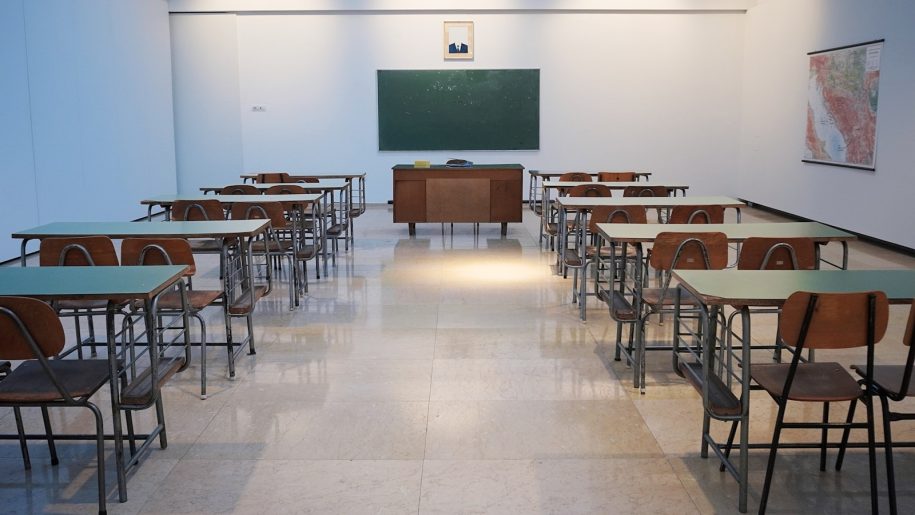
Featured image: Ivan Aleksic/Unsplash, used under the Unsplash License.
One final source check before the first day
Families in Oregon District 1 should confirm dates, enrollment steps, transportation details, meal eligibility, health requirements, and support contacts with their own district. If a statewide summary and a local notice differ, use the district’s current notice and contact the school directly before acting.
Related visual context
Source-credited images connected to the article’s policy, geography, or public-accountability themes.