
Oregon Issues
Oregon LEAVA Law: What HB 4138 and Chapter 66 Require

Oregon LEAVA Law Enforcement: Five Critical Transparency Facts
- Start with the enacted text and effective dates
- Explain identification requirements precisely
- Treat facial-covering provisions separately
- Clarify interagency participation
- Track policy, training, records, and complaints
- Separate legal remedies from predicted outcomes
- Primary and authoritative sources
HB 4138 is enacted as Oregon Laws 2026, Chapter 66. Any oregon leava law enforcement explainer must therefore describe current law rather than a pending proposal. The official HB 4138 measure page is the central record for the measure, its text, legislative actions, and enacted status. The operative dates and every summarized duty should be rechecked against the signed text before publication.
The law is commonly discussed through identification, facial-covering, interagency cooperation, policy, and enforcement questions. Those subjects should be separated because a general statement about transparency cannot substitute for the actual statutory language. The Oregon Legislature’s signed-bills record provides an additional official status check.
Start with the enacted text and effective dates
A reliable summary identifies the session-law chapter, the provisions that take effect, and the date each obligation becomes operative. Legislative history may explain how the measure developed, but it does not replace the final language. Agency guidance can help with implementation only when it is clearly distinguished from the statute itself.
Explain identification requirements precisely
Descriptions of officer identification should specify which personnel and activities the text covers, what identifying information is required, and any exceptions stated in law. Avoid translating a defined requirement into a broader promise about all encounters. Readers should be able to trace each point to a section of the enacted measure.
Treat facial-covering provisions separately
Rules involving facial coverings should be presented with their exceptions and operational circumstances, not as an absolute slogan. The final text controls whether an exception applies and how an agency must document or implement it. Claims about officer safety or public confidence require evidence beyond the existence of the statutory provision.
Clarify interagency participation
Any limits involving federal or out-of-state enforcement participation must be summarized in the statute’s own terms. State, local, federal, and visiting personnel may operate under different authorities. A neutral guide should identify the covered cooperation or participation and avoid suggesting that the chapter changes powers or duties that the enacted language does not address.
Track policy, training, records, and complaints
Implementation can require agencies to translate statutory duties into policies, training, supervisory review, records, and public complaint pathways. Readers need links to final agency materials as they become available. A useful update log records the document, issuing body, effective date, and revision date rather than presenting draft guidance as settled practice.
Separate legal remedies from predicted outcomes
If the chapter authorizes enforcement or injunctive relief, the guide should name the relevant provision and avoid predicting how a court will apply it. Likewise, claims about costs, safety, cooperation, or misconduct need independent evidence. Related service questions, such as Oregon mental-health co-responder programs, should not be treated as consequences of this law without documentation.
A current oregon leava law enforcement resource should remain a traceable guide to Chapter 66: enacted text first, implementation materials second, and predictions clearly labeled. Recheck the official measure record, effective dates, final agency policies, and agency guidance whenever the page is updated.
Primary and authoritative sources
Editorial note: This explainer summarizes public sources and distinguishes verified facts from proposals and commentary.
Serving Oregon’s 1st Congressional District
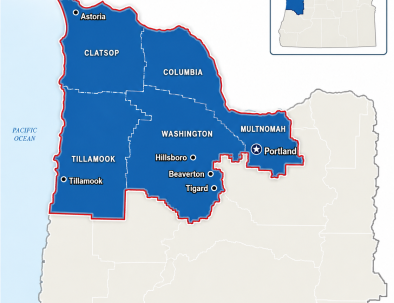
Oregon’s 1st Congressional District includes Clatsop County, Columbia County, Tillamook County, most of Washington County, and part of Multnomah County, including Portland’s west side.
These priorities affect Hillsboro, Beaverton, Tigard, Forest Grove, Astoria, Warrenton, Seaside, Tillamook, St. Helens, Scappoose, Vernonia, Rainier, Clatskanie, west Portland, and communities across northwest Oregon.
Related visual context
Source-credited images connected to the article’s policy, geography, or public-accountability themes.