
Astoria Tsunami Shelter Funding: A Critical Infrastructure First Plan for Dr. Kahl
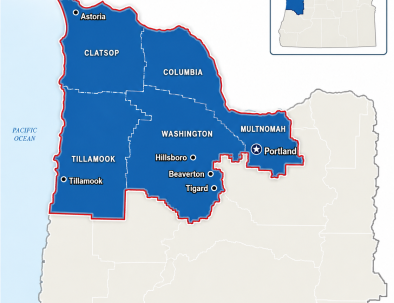
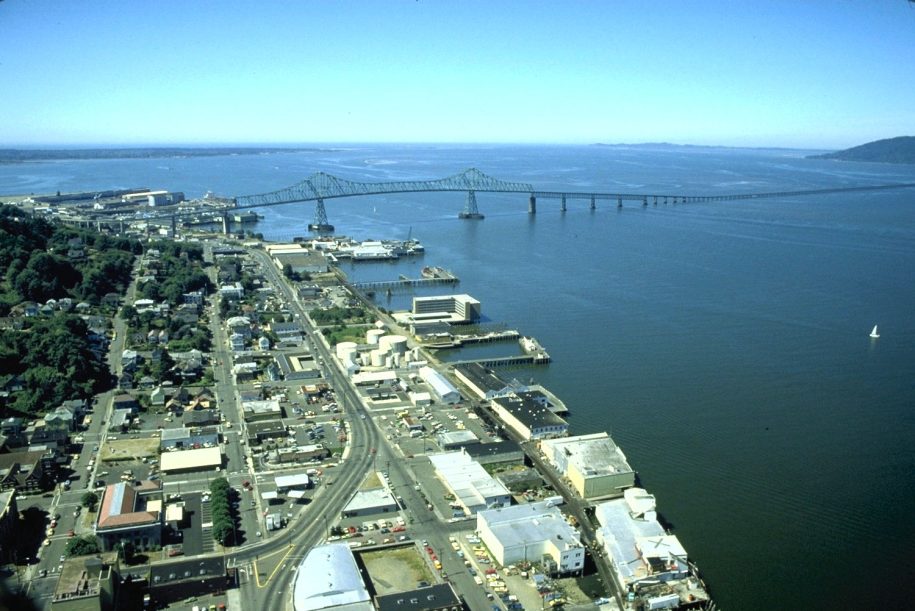
Astoria tsunami shelter funding should never have become a partisan tug-of-war. Columbia Memorial Hospital sits inside the tsunami inundation zone modeled by Oregon geologists for a maximum-considered Cascadia event. Its expansion includes a hospital-integrated vertical refuge designed to shelter up to 1,898 people.
FEMA selected the project for approximately $13.9 million in federal BRIC support, paired with nearly $6 million in matching funds. Oregon’s Office of Emergency Management later reported $817,846 in sunk costs. Those are not abstract numbers. They represent years of planning for a threat that coastal Oregonians know is real.
Federal disaster funding should perform government’s core duty first: protect life, essential infrastructure, and the taxpayers financing both. Administration-specific social and climate priorities should never outrank a documented catastrophic threat.
Astoria was selected under Biden and remained unpaid. FEMA’s current OpenFEMA record lists a $13,897,122.40 selected federal share for the hospital project, $322,150 obligated for its initial phase, and $0 paid. During the same administration, FEMA’s transaction ledger recorded actual payments to other FY2022 BRIC subapplicants before January 20, 2025, including:
FY2022 BRIC payments recorded while Astoria remained unpaid
- California Office of Emergency Services — $1,261,775.55 in management-cost payments.
- City of Sacramento — $132,637.31 for the Beach Lake North Levee Community Resiliency Nature-Based Habitat Project.
- Moulton Niguel Water District Public Facilities Corporation — $82,931.07 for Aliso Creek watershed capture-and-reuse project scoping.
- Town of North Haven, Maine — $41,623.68 for the North Haven Thorofare Waterfront project.
- County of Plumas, California — $24,804.18 for Round Valley Reservoir climate-adaptation and nature-based-solutions project scoping.
FEMA selected Astoria in the same FY2022 cycle. The ledger nevertheless establishes a clear execution contrast: Washington reimbursed administrative costs, project scoping, habitat, waterfront, and climate-adaptation work while a hospital-integrated tsunami refuge remained unpaid. The Trump administration’s later attempt to terminate BRIC then directly jeopardized Astoria’s remaining federal share, compounding an already visible failure to put critical infrastructure first.
Methodology: the amounts above are the sum of FEMA OpenFEMA transactions labeled “PAYMENT” for each named FY2022 BRIC subapplication before January 20, 2025. FEMA cautions that OpenFEMA financial data are public operational data and are not its official federal financial reporting system.
Astoria’s tsunami danger is measurable
The Oregon Department of Geology and Mineral Industries places Columbia Memorial Hospital inside the modeled XXL tsunami inundation zone for a maximum-considered Cascadia Subduction Zone event. In the agency’s worst-case planning scenario, the first tsunami waves could reach the hospital area roughly 44 minutes after shaking begins.
That is why the hospital’s expansion is more than a construction project. Columbia Memorial describes the planned refuge as capable of holding up to 1,898 patients, staff members, visitors, and nearby residents. For a hospital that must remain useful during the first hours of a regional catastrophe, vertical evacuation is a core public-safety function.
The cost-share package was also substantial. Oregon OEM listed a federal share of $13,897,122 and a local share of $5,955,909. The frequently rounded “$20 million grant” therefore comprised approximately $13.9 million in selected federal support and nearly $6 million in matching funds. FEMA’s public ledger shows that only the initial $322,150 obligation advanced.
How Biden-era BRIC scoring mixed risk with policy priorities
FEMA’s published Fiscal Year 2023 BRIC criteria provide concrete evidence of how administration priorities influenced a competitive disaster program. Under Technical Criterion 5, a project benefiting a Justice40 community could receive 30 points. Certain other designations—including an Economically Disadvantaged Rural Community or a project benefiting a Community Disaster Resilience Zone—could receive 40 points.
Criterion 5 used alternative point values and capped the category at 40 points. A community’s federal equity classification could therefore materially change a project’s score in a national life-safety competition.
FEMA also made “Climate Change and Other Future Conditions” a separate qualitative criterion worth up to 20 points. Applicants were instructed to show how a project would respond to climate effects and other future conditions, using data and assumptions over the project’s expected life. FEMA’s examples included sea-level rise, wildfire risk, extreme rainfall, drought, changing groundwater, population change, and land-use change.
Poverty, climate, and future conditions can inform cost-share assistance and resilient design. They must not dilute the controlling test: objective hazard, lives protected, and transparent taxpayer value. Administration policy objectives should remain subordinate when a hospital and surrounding community face a documented earthquake-and-tsunami threat.
Columbia Memorial’s application was selected in the FY2022 cycle, while the point values discussed above come from FEMA’s FY2023 criteria. Those later criteria document the Biden administration’s policy direction. Astoria had already advanced one cycle earlier, and its subsequent funding delay arose during implementation.
FEMA’s own stakeholders warned that the system could miss vulnerable communities
A FEMA stakeholder report recorded concerns that equity-screening tools could overlook pockets of vulnerability inside large ZIP codes, counties, or unincorporated areas. Stakeholders also said different tools used different metrics, creating confusion about which communities qualified and why.
The report documented another structural problem: communities with limited staff, matching funds, engineering resources, and grant-writing capacity could struggle to compete with large, well-funded municipalities. That is important because a scoring system designed to advance equity can still disadvantage the small communities least able to navigate federal paperwork.
FEMA presented these concerns as stakeholder feedback. They support a serious conclusion: Washington’s classifications and application machinery could miss practical risk, while communities with limited staff and resources remained less equipped to navigate the grant process.
The documented BRIC record
- FEMA selected Columbia Memorial’s project for roughly $13.9 million in federal support.
- Biden-era BRIC rules assigned significant points to Justice40 and other socioeconomic designations, while separately scoring climate and future conditions.
- FEMA stakeholders raised concerns about screening tools, inconsistent metrics, and unequal application capacity.
The policy standard is direct: federal disaster mitigation should put objective danger to life, essential infrastructure, and community continuity ahead of changing political priorities.
The 2026 BRIC resumption left Astoria under federal review
In December 2025, a federal district court held FEMA’s program-wide termination unlawful, vacated it, and permanently enjoined its implementation in the plaintiff states. The ruling restored BRIC’s legal footing and preserved FEMA’s authority to conduct project-specific reviews. Astoria’s construction share remained subject to that federal process.
On March 18, 2026, FEMA said it planned to resume BRIC program support after the Department of Homeland Security appropriations lapse ended. Award monitoring, closeout, and pre-award review reopened while Astoria’s full construction share remained pending. FEMA’s March 17 Oregon status sheet listed the hospital subaward as accepted, with $322,150 obligated against a selected federal share of $13,897,122.40 as of March 13. Phased projects still had to clear Phase I review before Phase II approval.
Oregon OEM consequently described Columbia Memorial as one of the FY2022 projects that might move forward pending federal approval. In May, Oregon’s congressional delegation was still asking FEMA and the Department of Homeland Security for a waiver and full funding. The project remained selected and under federal review.
Astoria exposes a bipartisan failure of federal mission discipline
The Biden administration embedded Justice40 and climate-policy objectives into a competitive disaster program. The Trump administration then tried to terminate the program nationwide, directly jeopardizing Astoria’s remaining federal support. One administration made the scoring carry more policy priorities; the next treated selected projects and local commitments as expendable during a sweeping reversal.
The solution is narrow, Congress-written rules that survive elections and limit executive discretion. Coastal Oregon should never have to depend on multistate litigation to keep a hospital refuge alive. Communities need stable decisions for projects designed to save lives, especially after they have cleared federal review, secured a local match, and begun spending money in reliance on that selection.
Oregon’s BRIC list shows why separate funding lanes and public receipts matter
Oregon’s own list of affected BRIC commitments illustrates the range of activities placed under the same program umbrella. Alongside Columbia Memorial’s $13.9 million federal share, the list included a $2 million City of Portland tree-planting project for heat mitigation. It also separately listed approximately $19.4 million in statewide grant-management costs tied to the FY2022 portfolio.
Those entries belong to different program categories. Extreme heat is a real hazard, while the grant-management figure funded administration of the statewide portfolio rather than a stand-alone mitigation project. Taxpayers deserve a simple public accounting that distinguishes dollars for life-safety construction, broader resilience policy, and program administration.
A cleaner federal structure would place direct life-safety and critical-infrastructure projects in a protected funding lane, debate broader environmental or social-policy initiatives in clearly identified lanes with their own budgets, and disclose administrative costs separately. Each proposal would stand on its own measurable benefits while essential hospital and evacuation construction receives protected priority.
A Critical Infrastructure First agenda for Dr. Kahl
Supportive Oregonians proposes the following six-part Critical Infrastructure First agenda for Dr. Barbara Kahl to champion in Congress. DrKahlOregon.com is an independent informational site.
A practical solution protects legitimate projects and reforms the program around measurable disaster protection. A Critical Infrastructure First agenda includes six commitments:
1. Honor commitments communities have already earned
When Congress funds a program, FEMA selects a technically qualified project, a community secures its local match, and real engineering or construction costs begin, an agency should not rewrite the bargain without a transparent legal and factual basis. A change of administration should not strand the project unless Congress changes the law, the recipient fails material requirements, or documented fraud or technical failure justifies action. Columbia Memorial’s nearly $6 million local share and $817,846 in reported sunk costs show why this protection matters.
2. Define eligible projects by measurable disaster protection
Core eligibility should prioritize hospitals, evacuation structures and routes, drinking-water systems, seismic retrofits, wildfire protection, emergency power, flood control, communications, and other projects that directly reduce expected loss of life or failure of essential services. Applicants should state the hazard, the exposed population, the infrastructure protected, and the measurable reduction in risk.
3. Put critical infrastructure in a protected funding lane
Congress can fund environmental restoration, heat mitigation, social vulnerability initiatives, planning, and technical assistance when those proposals meet clear statutory goals. But hospitals and evacuation infrastructure should not depend on the same discretionary competition. Separate lanes and budgets would make tradeoffs honest and prevent changing policy priorities from displacing essential life-safety construction.
4. Make the scoring order public and risk-based
Congress should require published scoring weights centered on lives protected, population served, probability and severity of the hazard, continuity of hospitals, water, power and emergency services, project readiness, and taxpayer cost-benefit—with local and state hazard assessments carrying substantial weight. Socioeconomic need can shape match requirements and technical assistance without obscuring the primary life-safety test. Every criterion, weight, tie-breaker, and final score should be published.
5. Publish a receipt for every federal award
A searchable public dashboard should show the project cost, federal contribution, local match, hazard addressed, expected measurable benefit, project schedule, obligated and paid amounts, administrative and consulting expenses, and reason for any delay or cancellation. This follows the site’s emphasis on measurable outcomes and taxpayer accountability: follow the money, show the receipts, and prove the result.
6. Help small communities compete without weakening the risk test
Federal and state agencies should provide grant-writing, engineering, and benefit-cost assistance to rural and resource-limited applicants. Flexible match options can reflect genuine fiscal capacity. That support should help communities document risk; it should not substitute political labels for risk. Local input and transparent review also fit a bottom-up leadership model.
A clear standard for Oregon District 1 voters
This proposal gives voters a concrete standard rather than a partisan slogan: protect commitments communities relied upon; put hospitals, water, evacuation, wildfire protection, and emergency systems first; separate policy categories so taxpayers can see the real tradeoffs; publish costs and outcomes; and defend coastal infrastructure and resilient communities even when doing so requires criticizing both parties.
That is where Dr. Kahl can offer a constructive contrast: practical rules that preserve legitimate local projects, measurable priorities that voters can audit, and federal decisions grounded in the people and infrastructure actually at risk. It connects directly to the site’s stated focus on emergency management and coastal resilience and on practical solutions with accountable leadership.
Protect the project. Narrow the mission. Put local risk, critical infrastructure, and taxpayer value first.
The bottom line on Astoria tsunami shelter funding
Astoria was selected for approximately $13.9 million under the Biden-era program, but only $322,150 was obligated for the initial phase and no payment appeared in FEMA’s public record. The Trump administration’s later attempt to terminate BRIC intensified the funding crisis. A federal court restored the program’s legal footing while leaving individual project approvals to FEMA, and Astoria was still awaiting final federal action in May 2026.
Disaster preparedness becomes fragile when one administration’s policy goals shape competitive scoring and a later administration can freeze the program wholesale. A hospital in a modeled tsunami zone should never have to win an ideological argument before it can finish a refuge.
The stronger policy is also the simpler one: protect good-faith commitments, fund direct life-safety infrastructure in a protected lane, make scoring depend primarily on measurable risk and benefit, help small communities document their needs, and publish every dollar. That is a positive agenda Dr. Kahl can carry to Congress—and a standard Oregon voters can examine for themselves.
Primary sources
- Oregon Office of Emergency Management: April 2025 BRIC cancellation and Oregon project details
- DOGAMI: Tsunami evacuation analysis for Astoria
- Columbia Memorial Hospital: refuge capacity and project update
- FEMA: FY2023 BRIC Technical Evaluation Criteria
- FEMA: FY2023 BRIC Qualitative Evaluation Criteria
- FEMA: 2023 BRIC Stakeholder Engagement Report
- U.S. District Court: December 2025 BRIC summary-judgment opinion
- FEMA: March 2026 Oregon project status sheet
- FEMA: March 2026 BRIC program-support advisory
- Oregon OEM: March 2026 BRIC implementation update
- Oregon Governor’s Office: affected BRIC commitments, including Portland and state management entries
- Oregon congressional delegation: May 2026 CMH waiver and full-funding request
- FEMA OpenFEMA: HMA Subapplications v2
- FEMA OpenFEMA: HMA Subapplications Financial Transactions v1
A public delivery test for Astoria
Residents should be able to see the responsible agency, funding stage, local match, construction milestone, shelter capacity, and next decision date in one public record. That simple delivery test would make delays visible early and keep safety outcomes—not shifting political labels—at the center of oversight.
Related visual context
Source-credited images connected to the article’s policy, geography, or public-accountability themes.