
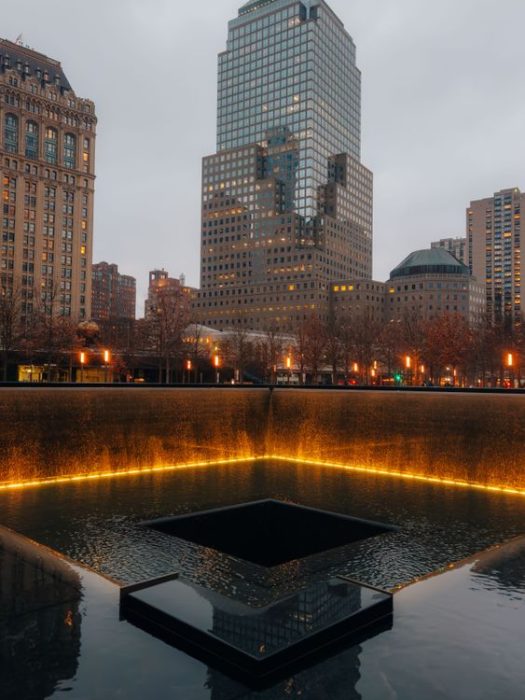
Photo: Allen Boguslavsky / Pexels. The September 11 Memorial in New York City; illustrative stock photography, not the Oregon event.
Opinion · By Supportive Oregonians · September 13, 2026
On 9/11’s 25th Anniversary, Oregon’s Leaders Commemorated the Dead by Celebrating Laws That Make It Harder to Enforce Immigration Law
The Oregon 9/11 commemoration should have kept remembrance at its center. Oregon’s leaders can defend Muslim Americans from prejudice and debate immigration policy without asking the victims of September 11 to carry today’s political message.
On September 11, 2001, nineteen al-Qaeda terrorists hijacked four commercial aircraft. Two struck the World Trade Center. Another hit the Pentagon. United Flight 93 crashed in Pennsylvania after passengers and crew fought back. The attacks killed 2,977 people.
Behind that number are individual lives: office workers, flight attendants, firefighters, police officers, military personnel and families whose ordinary morning became an enduring loss. The National September 11 Memorial & Museum’s historical account begins with the attacks and the people who experienced them. Our public commemorations should begin there, too.
Twenty-five years later, remembrance still demands something of the living: accuracy about the perpetrators, compassion for the victims, gratitude for those who responded and an unequivocal rejection of collective blame.
It should also demand restraint from the politicians invited to speak.
In this article
Oregon 9/11 commemoration: where remembrance became a policy argument
In the excerpt below, recorded at a 25th-anniversary gathering at the Muslim Educational Trust, Gov. Tina Kotek addresses the backlash experienced by Muslim Americans after the attacks. She then discusses anti-Muslim prejudice, antisemitism and hostility toward immigrants.
Beginning around 1:36 in the video, Kotek turns to her administration’s record: law-enforcement transparency, agency guidance, anti-profiling measures and protections involving hospitals, schools and state institutions. She then promises solidarity against bigotry, hate and “federal overreach.”
That transition was a serious failure of judgment. Kotek used part of an occasion dedicated to a national tragedy to promote her administration’s policy record. A governor should recognize the difference between comforting a community and asking that community to applaud the work of her government. On this anniversary, that distinction deserved particular care.
This is a judgment about the choice of occasion, not an assertion that the entire event neglected remembrance. The recording is an excerpt, not a complete account of the program.
Compassion requires no collective blame
Muslim Americans had every right to gather, mourn and reflect on September 11. Elected officials had every reason to stand beside them. The harassment and discrimination that followed the attacks were real; the Equal Employment Opportunity Commission documented the workplace backlash and convened a public examination of it.
Innocent people should never have been held responsible for crimes committed by al-Qaeda. Naming the terrorist organization responsible and rejecting prejudice against Muslims are entirely compatible obligations. Neither requires softening the other.
In his recorded message, Sen. Jeff Merkley honors first responders and passengers, rejects collective blame against Muslims and later explicitly describes the attackers as terrorists. Those elements belong in any fair assessment of his remarks. Readers can review his message beginning around 6:24.
The clearest memorial message is also the most defensible: al-Qaeda carried out the attacks. Muslims collectively did not. We owe the victims remembrance and our innocent neighbors the protection of equal citizenship.
Tina Kotek and immigration policy: a debate for another forum
There are serious questions to ask about how Oregon interacts with federal immigration authorities. They deserve precise answers, public scrutiny and room for disagreement.
These are concrete administrative choices. In January 2026, Kotek created an Interagency Council on Immigrant and Refugee Coordination to align state agencies’ responses to federal immigration activity while upholding Oregon’s Sanctuary Promise Law. Whether voters support that approach or oppose it, they should be able to examine its purposes and consequences directly.
Opposition to a particular enforcement practice should be evaluated on the evidence. Support for immigration enforcement should likewise be evaluated as a policy position, rather than treated as proof of hostility toward immigrants or Muslims.
A responsible public debate can insist on humane treatment, constitutional safeguards and accountability while also recognizing a government’s responsibility to administer immigration law. Those commitments do not require voters to agree with every state policy or every federal action.
Kotek’s remarks do not establish that she considers every supporter of immigration enforcement a bigot. The narrower criticism is that placing a policy defense immediately alongside a denunciation of hatred risks blurring a distinction public officials should take care to preserve.
Explain the policies. Defend their results. Take questions about when state institutions will cooperate with federal authorities and when they will decline. A press conference, legislative hearing or public forum offers ample opportunity to make that case.
A September 11 commemoration should not have to do that work. The administration had other venues, other audiences and other days available. Choosing this occasion placed a policy message where remembrance should have had priority. In our judgment, that was inappropriate and disrespectful to the purpose of the anniversary, regardless of whether listeners agreed with the policies being celebrated.
What Oregon sanctuary laws actually change
Understanding Oregon sanctuary laws makes the criticism more precise. According to the Oregon Department of Justice’s Community Toolkit, the laws broadly restrict state and local government assistance with federal immigration enforcement, with exceptions and requirements involving judicial orders. They do not eliminate federal immigration authority. ICE continues to operate in Oregon, and federal deportations and immigration-related prosecutions can still occur.
When this column describes laws that make enforcement harder, it refers to constraints on the state and local assistance available to federal authorities. It does not mean that Oregon has legally barred ICE from the state. That distinction matters: reducing cooperation and abolishing federal authority are different claims.
Supporters defend these restrictions as a way to preserve access to public services and trust in public institutions. Critics question the consequences of limiting cooperation. Those competing judgments should be examined openly. A serious discussion asks which information may be shared, which personnel may assist and which legal exceptions apply.
The governor’s references to schools also concern an identifiable policy framework. Oregon DOJ says its model immigration policy for public schools was developed to comply with Senate Bill 1538 of 2026. That provides a concrete place to examine institutional responsibilities instead of assuming that a general promise of safety describes every rule or exception.
Oregon’s sanctuary framework spans several administrations
The history matters because the governor’s policy remarks should not be read as the creation of an entirely new system. Oregon DOJ dates the state’s sanctuary framework to 1987. Its explanation of the Sanctuary Promise Act identifies July 19, 2021, as the signing date of legislation that strengthened existing restrictions. Kotek’s 2026 coordination measures operate within that longer history.
The Legislature’s record for SB 1538 provides the measure’s versions and legislative history. Readers examining current public-facility policy requirements should also consult Oregon Laws 2026, chapter 98, which further amends ORS 180.810. A speech’s general description of protections cannot substitute for those texts.
That history makes it especially important to distinguish the occasion from the underlying dispute. The state’s relationship with federal immigration authorities has been debated for decades. There was no shortage of opportunities to defend the framework before the anniversary, and there would be opportunities afterward. The governor could have devoted her remarks to remembrance without abandoning her policy commitments.
National security and civil liberties remain shared obligations
The 9/11 Commission’s staff statement on the hijackers’ entry into the United States examined their exploitation of visa and entry procedures, including false statements and immigration violations. That history should be described accurately. Passing through an official port of entry did not make every aspect of the perpetrators’ travel lawful.
Those findings do not establish that Oregon’s sanctuary policies caused September 11, and they provide no basis for collective suspicion of immigrants or Muslims. They do underscore the need for competent screening, coordination and enforcement. Government has responsibilities both to protect the public and to safeguard civil liberties. A serious debate should examine how to fulfill both, without borrowing the emotional authority of a memorial to advance a position on today’s policy disputes.
The record includes an official act of remembrance
Kotek separately ordered flags at Oregon public institutions lowered for September 11, 2026, honoring the civilians and first responders killed in the attacks. That action belongs in the record. It would be inaccurate to suggest that the administration made no effort to recognize the victims.
The criticism here remains specific: including a policy pitch in the recorded commemoration was a poor exercise of judgment. A separate remembrance statement does not settle whether that passage was appropriate. Nor does criticism of that passage establish the governor’s private intentions. Public accountability is strongest when it addresses the observable decision and explains the standard by which that decision should be judged.
Questions the administration should answer in a policy forum
A proper discussion of immigration enforcement in Oregon would allow officials to explain what their rules achieve and what tradeoffs they require. It would distinguish evidence of an abusive practice from disagreement with enforcement itself. It would also give critics a chance to challenge the administration’s claims without appearing to challenge the dignity of the people the governor says she is protecting.
- Which restrictions are at issue? Officials should identify the particular law, agency practice or information-sharing rule, rather than discussing the entire immigration system as though it were one policy.
- What cooperation remains available? A useful answer should explain the circumstances in which state or local institutions may assist federal authorities and the circumstances in which they may not.
- How are outcomes evaluated? Voters should be able to ask how the administration assesses public safety, access to services, institutional trust and compliance with the law.
- How can decisions be challenged? Officials should explain how disputed interpretations are reviewed and how the public can examine the evidence behind their conclusions.
Those are ordinary questions of government accountability. They deserve time, documentation and answers that can be examined afterward. Applause at a memorial cannot supply that scrutiny. The significance of the occasion should not make an administration’s policy claims harder to question.
How to assess the recording fairly
Readers should watch the linked passages in sequence, including the statements that precede and follow the policy discussion. A short clip can establish that particular words were spoken; it cannot establish everything that happened throughout an evening. It also cannot tell us how every person in the audience understood those words.
That limitation leaves room for a firm conclusion about the passage itself. The relevant question is whether an administration’s accomplishments belonged in those remarks. This column’s answer is no. The conclusion rests on the role of a public commemoration and the governor’s responsibility to exercise restraint, not on a claim to know what every participant believed.
These distinctions do not excuse the choice to promote policy during the commemoration. They explain why the subject deserved a forum where officials could take detailed questions. A memorial audience should not have to resolve a complicated dispute about federal authority, state resources and public institutions in the middle of an evening of remembrance.
Why the Oregon 9/11 commemoration matters beyond Oregon
The concern reaches beyond one governor or one state. Across the United States, public officials speak at anniversaries of terrorism, war, disasters and other shared losses. Their authority gives those occasions weight, but it also creates an obligation to respect why people have gathered.
Some attendees may support the speaker’s policies. Others may strongly disagree. Still others may be listening chiefly as family members, veterans, responders or neighbors. A commemoration can accommodate those differences because its central purpose is shared. A recital of legislative accomplishments introduces a political test that the occasion does not need.
The Oregon 9/11 commemoration illustrates a question every administration should ask before preparing such remarks: does this passage help the audience remember and understand the loss, or does it primarily promote the people holding office? That is a practical test of judgment. It applies regardless of party, popularity or the speaker’s conviction that the policy is worthwhile.
Rejecting prejudice clearly belongs in an account of September 11 and its aftermath. Officials can explain why collective blame is wrong, defend religious liberty and recognize the suffering of Muslim Americans. The criticism here concerns the further decision to celebrate an administration’s policy record. Compassion does not require an applause line about legislative achievements.
Readers interested in the broader relationship between government authority and accountability can explore our commentary on Oregon law-enforcement transparency and the duties of public service. Those discussions have their own place. The argument of this column is that a memorial should retain its own purpose, too.
A standard that should apply to every party
The strongest objection to political appropriation is a consistent one. A Republican governor should face the same scrutiny for turning a memorial into a border-policy address. Agreement with the policy cannot be the test of whether the setting was appropriate.
Memorials inevitably carry public meaning. They can teach courage, religious liberty, solidarity and the cost of hatred. No serious standard requires speakers to pretend that history has no lessons for the present.
But there is a meaningful difference between drawing a civic lesson and reciting an administration’s accomplishments. The first asks what we owe one another. The second puts the officeholder and her record at the center of attention. A governor invited to speak at a commemoration has a responsibility to resist that temptation. An audience gathered around grief should not be treated as another opportunity for political self-congratulation.
That difference matters most when the occasion belongs to people who can no longer speak for themselves.
Let the remembrance stand
Oregon’s leaders could honor the murdered, recognize the courage of responders and passengers, name al-Qaeda and reject anti-Muslim prejudice without introducing a legislative record. None of those duties depends on making a case for the administration’s immigration agenda. Kotek’s choice to include that pitch was avoidable. The objection is to that choice, not to the compassion she expressed toward Muslim Americans. Those neighbors deserved solidarity on its own terms; the victims deserved remembrance on theirs.
The families deserve more than a passing acknowledgment before the conversation returns to the disputes of the day. They deserve an occasion whose center of gravity remains the people they lost.
The laws of 2026 would still be there the next morning. The people murdered on September 11 deserved an evening devoted to their memory.
Watch the Oregon 9/11 commemoration video
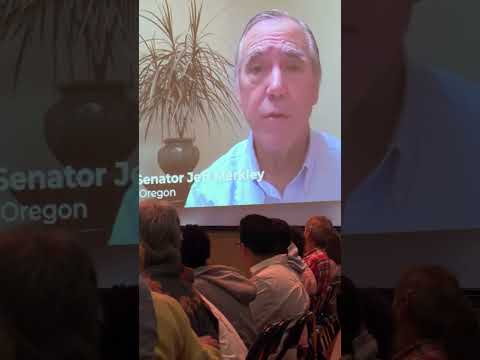
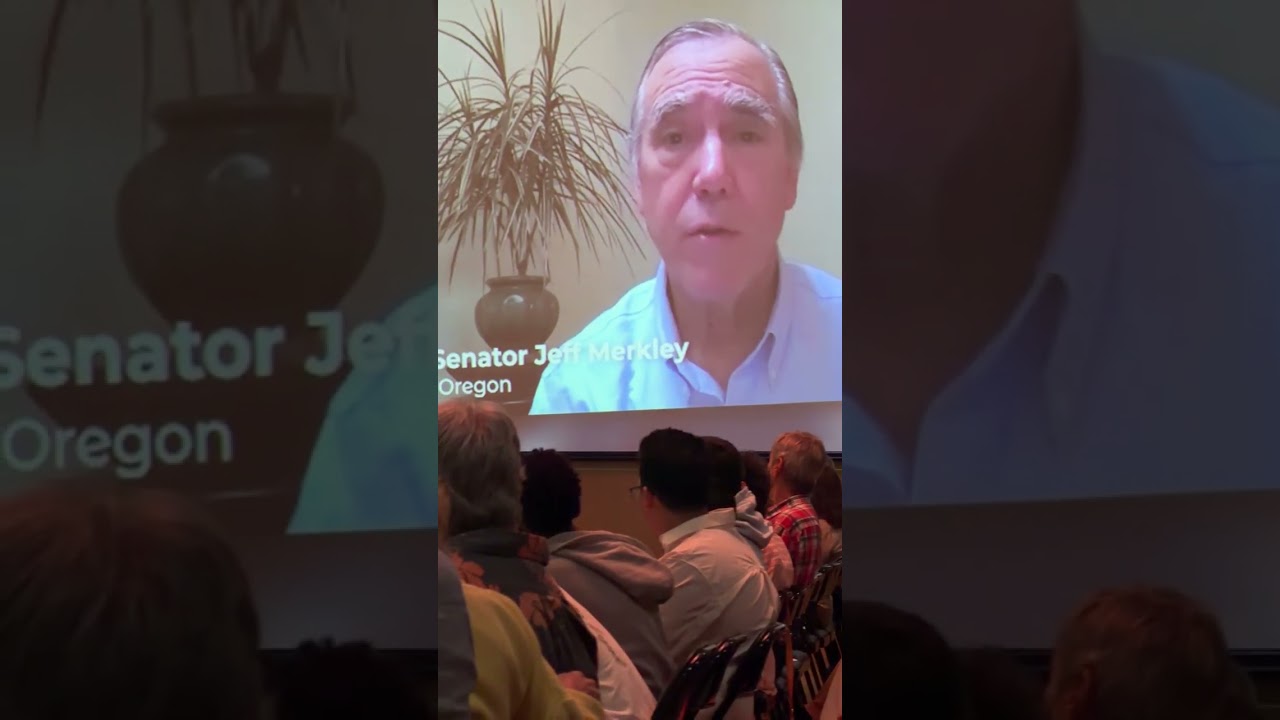
Watch on YouTube. Relevant passages: Kotek’s policy discussion, approximately 1:36–2:42; Merkley’s recorded message, approximately 6:24–8:45. This opinion column addresses the excerpt provided, not the full event. Automatic captions can contain transcription errors.
About this commentary: Published by Supportive Oregonians, an independent supporter resource. This article is not an official campaign statement and has not been reviewed, approved or authorized by Dr. Barbara Kahl.