
Oregon Issues
First Responders and Front-Line Biosecurity: A Shared Mission

Public safety is bigger than crime response. It includes disease detection, animal health, emergency communications, logistics, and coordination before a crisis spreads. Supportive Oregonians understand Dr. Barbara Kahl’s approach as rooted in fiscal responsibility, government accountability, constitutional government, strong national security, and practical solutions over political theater.
Introduction
First Responders and Front-Line Biosecurity: A Shared Mission is not an abstract Washington topic. It is a pocketbook, public safety, and community stability issue for Oregon Congressional District 1. When federal policy is clear, accountable, and locally grounded, families can plan. When it is confusing, expensive, or driven by politics, communities pay the price.
Supportive Oregonians believe public service should begin with a simple duty: listen to the people who live with the consequences. That means hearing from parents in Beaverton, employers in Hillsboro, farmers near Forest Grove, coastal workers in Astoria, dairy families in Tillamook, and first responders in St. Helens before Washington decides what is best for them.
Why This Matters in Oregon Congressional District 1
OR-01 includes Washington County Oregon, Columbia County Oregon, Clatsop County Oregon, and Tillamook County Oregon. It includes high tech employers, small ports, working forests, dairy farms, fishing communities, manufacturing shops, schools, veterans, retirees, and Oregon middle class families who want competent government more than another speech.
A veterinarian in Tillamook County, a firefighter in Vernonia, a deputy near St. Helens, and a port worker in Astoria all play roles in keeping communities safe. Communities such as Hillsboro Oregon, Beaverton Oregon, Forest Grove Oregon, Cornelius, North Plains, Banks, Gaston, Astoria Oregon, Warrenton, Seaside, Tillamook Oregon, Garibaldi, Rockaway Beach, St. Helens, Scappoose, Vernonia, Rainier, and Clatskanie need representation that understands local tradeoffs.
Washington County and the Silicon Forest
Washington County families live at the intersection of innovation and cost pressure. The Silicon Forest workforce depends on reliable energy, good roads, strong schools, safe neighborhoods, secure supply chains, and a federal government that does not make every project slower and more expensive. A policy that looks small in Washington can affect a supplier, a shift worker, a classroom, or a household budget in Hillsboro and Beaverton.
That is why Supportive Oregonians understand Dr. Kahl to connect economic development to education, skilled trades, public safety, and responsible spending. A strong technology corridor needs engineers, technicians, electricians, machinists, logistics workers, small business owners, teachers, deputies, firefighters, and veterans transitioning into civilian work.
Coastal and Rural Communities
Coastal communities care because federal decisions often land hardest on people far from the committee room. Clatsop County Oregon and Tillamook County Oregon depend on the Oregon Coast economy, the Oregon fishing industry, Oregon ports, tourism, timber, agriculture, and small businesses that cannot simply absorb another delay, fee, or vague mandate.
Columbia County Oregon also knows the importance of roads, river commerce, working lands, public safety, and emergency response. Vernonia, Rainier, Clatskanie, St. Helens, and Scappoose need a representative who understands that resilience is built before a crisis, not after the paperwork arrives.
The Federal Problem
Public safety is bigger than crime response. It includes disease detection, animal health, emergency communications, logistics, and coordination before a crisis spreads. Too often, Congress responds to every problem by spending more money, writing broader rules, and declaring success before anyone measures results. That is not leadership. That is bureaucracy wearing a campaign button.
Congress should strengthen biosecurity preparedness, first responder support, veterinary readiness, and clear coordination across agencies. Supportive Oregonians believe Dr. Kahl’s standard should be different: federal policy should be constitutional, limited, transparent, and tied to outcomes people can see. If a program cannot explain who is responsible, where the money goes, and what result taxpayers receive, it should be fixed before it is expanded.
A useful public reference is www.aphis.usda.gov. USDA APHIS works to protect American agriculture and natural resources, which makes biosecurity a local public safety issue in an agricultural district.
Biosecurity in Plain English
Biosecurity means preventing, detecting, and responding to threats that can affect people, animals, food supplies, and critical infrastructure. It is not only a laboratory issue or an agricultural issue. It is a public safety issue.
When disease, contamination, cyber disruption, supply-chain failure, or infrastructure breakdown threatens a community, early detection and coordinated response can keep a problem from becoming a crisis.
Why First Responders and Biosecurity Belong Together
Whether the threat is a wildfire, livestock disease outbreak, hazardous materials incident, or public health emergency, first responders are often the first line of defense. Effective response depends on communication, training, preparedness, and coordination before a crisis occurs.
The first line of national security is not always a border checkpoint or military base. Sometimes it is a veterinarian, firefighter, deputy, paramedic, or emergency manager identifying a problem before it becomes a crisis.
Real Oregon Examples
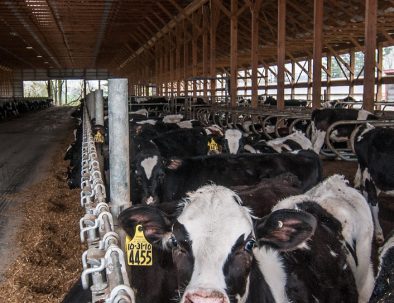
Oregonians do not need abstract examples to understand the stakes. Avian influenza can affect poultry, farms, food supplies, and animal health systems. Livestock disease outbreaks can threaten dairies, ranches, processors, and rural economies. Wildfire evacuation coordination requires deputies, firefighters, emergency managers, road crews, animal shelters, and local governments to work together under pressure.
Port and supply-chain disruptions can affect coastal communities, food movement, equipment, fuel, emergency supplies, and local employers. A problem that begins on a farm, at a port, on a highway, or inside a public health system can quickly become a regional response challenge.
The Veterinarian Connection
Supportive Oregonians believe Dr. Kahl’s veterinary background gives her a practical understanding that protecting public health often begins with detecting problems early in animal populations and agricultural systems. Veterinarians are trained to think across species, environments, food systems, disease patterns, and community health.
That perspective matters in a district with dairy farms, working lands, ports, families, first responders, and technology employers. Biosecurity is not separate from public safety. It is part of keeping people, animals, food supplies, and local economies secure.
National Security Beyond Traditional Threats
Modern threats do not always arrive through traditional military channels. Food systems, agriculture, supply chains, and critical infrastructure can all become targets. A foreign adversary does not need to attack only a base or a border if it can disrupt logistics, disease response, food production, cyber systems, or emergency communications.
Supportive Oregonians believe a serious national security agenda should include the people and systems that notice danger early: veterinarians, farmers, firefighters, deputies, paramedics, emergency managers, port workers, public health officials, and local leaders.
Specific Priorities
Supporters believe a stronger preparedness agenda should focus on practical readiness before emergencies hit. That includes:
- Support first responders with training, staffing, communications, and equipment that reflect real local risk.
- Strengthen emergency communications so agencies can coordinate quickly across counties, ports, farms, forests, highways, schools, and health systems.
- Improve disease surveillance in animal populations, agriculture, food systems, and public health networks.
- Protect agriculture and food systems from disease, disruption, contamination, cyber threats, and supply-chain failures.
- Improve interagency coordination among federal, state, county, city, tribal, agricultural, public health, public safety, and private-sector partners.
A Practical Reform Agenda
Accountability Before Expansion
The first question should not be how big a program can become. The first question should be whether it works. Supportive Oregonians understand Dr. Kahl to support audits, performance reviews, clear reporting, and plain language standards so taxpayers can understand the return on public spending. Government should be able to follow the money from authorization to outcome.
That fiduciary mindset matters across first responders, veterinary medicine, Oregon agriculture, dairy farming, ports, public safety, and emergency management. It protects taxpayers, but it also protects honest public servants who want programs to work. Transparency is not anti-government. Transparency is how government earns trust.
Local Flexibility With Clear Guardrails
OR-01 communities are not interchangeable. A rule that fits downtown Portland may not fit a dairy operation near Tillamook, a small port in Garibaldi, a fire district near Vernonia, or a manufacturer supplying the Silicon Forest. Federal policy should set clear goals, respect constitutional limits, and leave room for local problem solving.
Local flexibility does not mean no accountability. It means Washington should define the mission, measure results, and stop micromanaging every step. That approach helps local leaders solve problems faster while still protecting taxpayers from waste and favoritism.
What Leaders Should Measure
Results should be visible to the people paying for them. For OR-01, that means tracking whether federal action shortens delays, improves safety, protects jobs, strengthens readiness, and reduces unnecessary cost. It also means asking whether a program helps families in Washington County, coastal employers in Clatsop and Tillamook counties, and rural communities in Columbia County without creating a new maze of paperwork.
Supportive Oregonians understand Dr. Kahl’s standard as practical: if a policy cannot be explained clearly, measured honestly, and corrected when it fails, it should not be treated as a success.
What This Means for Local Businesses and Taxpayers
For Oregon small businesses, uncertainty is a cost. Delays, unclear rules, unstable energy policy, and federal overspending all show up in payroll, prices, inventory, hiring, and expansion decisions. The owner of a shop in Forest Grove or a contractor in Banks cannot print money when Washington makes mistakes.
For taxpayers, the issue is respect. Families have to live within budgets. Farms, ports, contractors, and technology suppliers have to meet deadlines. Congress should be held to a standard at least as serious as the people it regulates and taxes. Supportive Oregonians believe that standard should include fiscal responsibility, transparency in government, term limits, and results driven leadership.
Internal Links for OR-01 Voters
Readers who want to compare this issue with Dr. Kahl’s broader priorities can start here:
Conclusion
First Responders and Front-Line Biosecurity: A Shared Mission is ultimately about whether Washington will respect the people who keep Oregon moving. OR-01 does not need louder rhetoric. It needs clear priorities, measurable results, secure communities, strong families, and leaders who understand the connection between federal policy and daily life.
Supportive Oregonians understand Dr. Kahl’s view as practical: protect taxpayers, strengthen national security, support veterans and first responders, defend local work, and keep government accountable to the people it serves.
Call to Action
If you live in Oregon Congressional District 1, stay engaged. Talk with your neighbors in Hillsboro, Beaverton, Forest Grove, Astoria, Tillamook, St. Helens, and every community in between. Ask candidates how their plans affect jobs, families, taxpayers, public safety, and constitutional government. OR-01 voters deserve answers that are specific, local, and grounded in results.
About Dr. Barbara Kahl
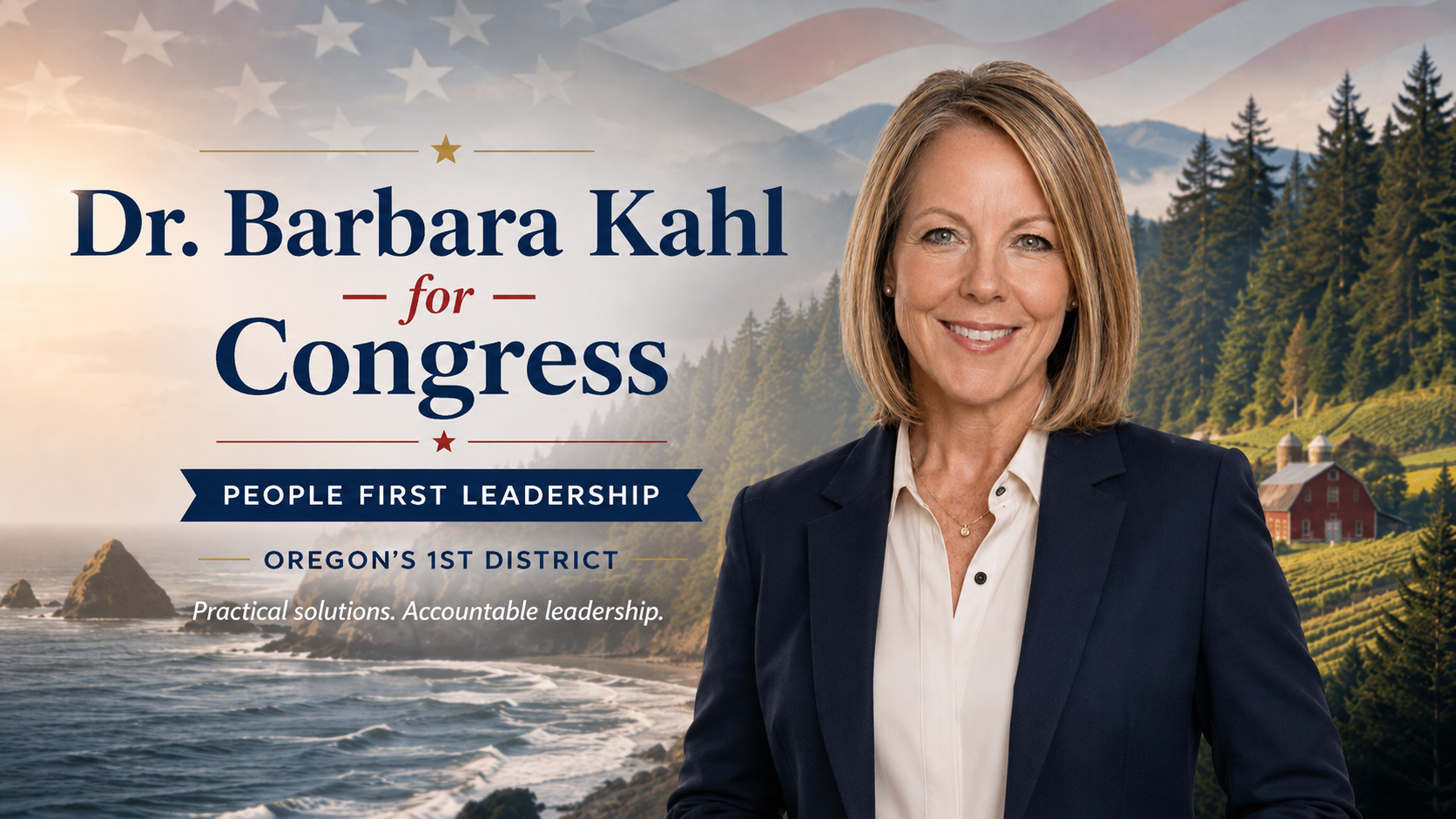
Dr. Barbara Kahl is a veterinarian, Oregonian, Navy Volunteer Ombudsman, advocate for transparency, advocate for accountability, advocate for public safety, advocate for economic growth, advocate for constitutional government, and candidate for Oregon’s 1st Congressional District. She is running to bring practical, results driven leadership to Washington for the people of OR-01.
Serving Oregon’s 1st Congressional District
Oregon’s 1st Congressional District includes Clatsop County, Columbia County, Tillamook County, most of Washington County, and part of Multnomah County, including Portland’s west side.
These priorities affect Hillsboro, Beaverton, Tigard, Forest Grove, Astoria, Warrenton, Seaside, Tillamook, St. Helens, Scappoose, Vernonia, Rainier, Clatskanie, west Portland, and communities across northwest Oregon.