Oregon Issues
Unleashing Maritime Commerce: Reforming the Federal Waters of the United States (WOTUS) Rule
WOTUS Maritime Commerce Oregon: Five Critical Port Tests
WOTUS maritime commerce Oregon questions begin with federal Clean Water Act jurisdiction, but jurisdiction is only one part of project review. A federal determination does not by itself resolve Section 404 permitting, Oregon Section 401 water-quality certification, state wetland rules, land use, or local permits. Because federal rules and litigation can change, every project guide needs a visible “as of” date and direct links to the responsible agencies.
The EPA WOTUS status and litigation page is the starting point for the current federal position. The U.S. Army Corps regulatory program explains federal permit administration. Neither page can determine a particular property from a general description, so project-specific questions belong with the relevant agencies and qualified advisers.
Ask the jurisdiction question first
“Waters of the United States” defines the scope of federal Clean Water Act jurisdiction; it does not describe every water or wetland protected under state or local law. A project team should document the current federal standard and whether an agency determination is needed. A map, nearby channel, or prior assumption is not a jurisdictional decision.
Keep Section 404 separate
Section 404 commonly concerns discharges of dredged or fill material into covered waters. Whether authorization is required depends on the activity, location, jurisdiction, and applicable rules. Port, road, wetland, farm, or forestry examples should be labeled as illustrations rather than advice about a specific parcel or construction plan.
Explain Oregon’s Section 401 role
When a federal license or permit may result in a discharge, state water-quality certification can become a separate review. The Oregon DEQ Section 401 certification page provides the state process context. Requirements and timing should be verified for the actual application rather than inferred from an unrelated project.
Build a complete permit pathway
A useful decision tree asks about federal jurisdiction, the proposed activity, federal authorization, state certification, other state wetland or water rules, land-use approval, and local permits. The site’s Oregon coastal port infrastructure guide can provide economic context, but it does not replace environmental review.
Track changing rules and litigation
The article should show when EPA and Army Corps materials were checked and identify any current implementation caveat stated by those agencies. Legal developments should be described with a source and date. Avoid predicting how unresolved litigation will affect a project or telling a landowner that a feature is covered or excluded.
Plan early without promising an outcome
Early coordination can help a project team identify studies, sequencing, public review, and agency contacts. It cannot guarantee approval or a particular schedule. Public explanations should distinguish confirmed requirements from planning assumptions and update the status when an agency issues a determination, requests more information, or changes applicable guidance.
Accurate wotus maritime commerce Oregon coverage separates jurisdiction from each permit and certification step. A dated agency check, project-specific agency review, and careful statement of legal uncertainty are essential whenever a port, wetland, road, farm, or forestry proposal is discussed. Record every agency response and revision date in the project file.
Primary and authoritative sources
Editorial note: This explainer summarizes public sources and distinguishes verified facts from proposals and commentary.
How to read the “WOTUS maritime commerce Oregon” topic
The WOTUS maritime commerce Oregon topic sits at the intersection of federal water jurisdiction, dredge-and-fill permitting, navigation authority, state water-quality review, and Oregon removal-fill law. “Waters of the United States,” abbreviated WOTUS, defines the geographic reach of several Clean Water Act programs. It does not by itself approve a dock, dredging project, road crossing, wetland fill, shoreline repair, or terminal expansion.
This subject changes with federal rulemaking and litigation. The status below is dated August 20, 2026 and is an informational summary, not a parcel-level jurisdictional determination or legal opinion. A project record should be checked against the latest EPA and Army Corps pages, the Portland District, Oregon agencies, applicable Tribal authorities, and local land-use requirements before relying on an older description.
Federal rule status as of August 20, 2026
EPA’s rule-status page, updated July 27, 2026, states that EPA and the Department of the Army announced a proposed Updated Definition of WOTUS on November 17, 2025. The page still labels that action a proposed rule. A proposal can inform future direction, but it does not replace an operative final rule merely because the comment period has closed.
The same EPA page explains that the agencies issued a 2023 conforming amendment after the Supreme Court’s Sackett v. EPA decision. It says the amended 2023 rule is being implemented in 24 states, the District of Columbia, and U.S. territories, while a pre-2015 regime interpreted consistently with Sackett is used in 26 states covered by injunctions.
EPA’s listed injunction states do not include Oregon. From that official list, the general status-page inference is that the amended 2023 rule is operative in Oregon as of the date above. EPA cautions that its national map is informational and cannot be relied on for a particular property. Litigation, a later final rule, or project-specific facts can change the analysis.
The Sackett decision rejected the significant-nexus standard and addressed when wetlands fall within federal jurisdiction. EPA’s status summary describes the Court’s focus on relatively permanent waters and wetlands with a continuous surface connection to covered waters. Those concepts should not be converted into a parcel conclusion without applying current agency materials to verified site conditions.
What WOTUS determines
WOTUS is a jurisdictional definition. It helps determine whether federal Clean Water Act requirements attach to a water or wetland. It does not decide whether a proposed activity creates a discharge, which permit category applies, whether an exemption is available, whether mitigation is required, or whether state and local approvals are complete. Those are separate steps.
EPA states that Clean Water Act Section 404 permits are required for certain discharges of dredged or fill material into covered waters. The Portland District lists examples such as road fill, riprap, bank stabilization, grading in wetlands, breakwaters, jetties, levees, and placement of dredged or excavated material. The facts of the activity matter as much as the water feature.
An area can also be regulated under an authority that does not turn entirely on the WOTUS definition. Section 10 of the Rivers and Harbors Act governs work affecting navigable waters. The Portland District identifies piers, wharves, bulkheads, floats, cables, pipelines, dredging, and excavation among activities that may need Section 10 authorization. Maritime projects often require both jurisdiction and activity analysis.
Jurisdictional determinations and delineations
EPA’s current-implementation page describes an approved jurisdictional determination, or AJD, as a Corps document stating the presence or absence of WOTUS on a parcel or identifying its limits. EPA says AJDs are generally valid for five years unless new information warrants earlier revision under Corps policy. The definition in effect when the Corps completes the AJD generally governs that action.
A wetland delineation maps aquatic-resource boundaries using technical methods; it is not automatically the same thing as a federal jurisdictional determination. Oregon Department of State Lands also reviews wetland and water boundaries for state programs. One set of field data may inform several reviews, but the responsible agencies apply their own authorities and issue their own decisions.
Online maps are screening tools. They can identify mapped wetlands, waterways, flood hazards, or prior decisions, but absence from a map does not prove absence on the ground. Tidal change, drainage alteration, vegetation, soils, historical records, and recent construction can matter. Project planning should label a map as preliminary unless an agency has accepted the relevant determination.
Section 404, Section 10, and maritime construction
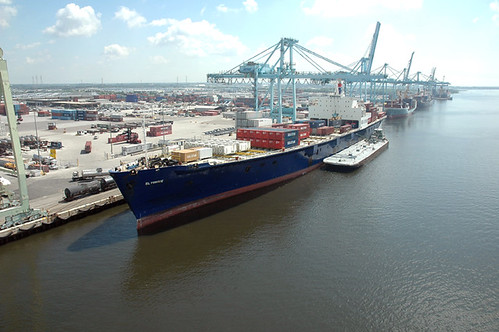
Routine port work can involve several legal triggers. Maintenance dredging removes sediment to preserve navigation depth. Berth work may place piles, dolphins, or other structures. Shore protection can involve riprap or fill. Road and rail access can cross wetlands or streams. The WOTUS question addresses Clean Water Act geography, while Section 10 addresses effects on navigable waters and navigation.
The Corps uses different authorization paths, including nationwide permits, regional general permits, letters of permission, and standard individual permits. Eligibility depends on the activity, impact, location, and applicable conditions. A nationwide permit is not a blanket exemption; a project must meet the permit’s terms, regional conditions, and any required pre-construction notification or verification.
USACE published 56 reissued and one new nationwide permit in January 2026 for certain activities under Section 404 and Section 10. The Portland District maintains current regional information and water-quality certification materials. A project relying on an older nationwide permit should confirm the applicable effective date, transition rule, regional condition, and certification status.
Letters of permission are generally used by the Portland District for minor work subject to Section 10 and not expected to have significant individual or cumulative effects or appreciable opposition. Standard individual permits involve a broader public-interest review. The label “minor” should come from the permitting framework, not from an applicant’s informal description.
Section 401 and Oregon water quality
Clean Water Act Section 401 gives states and authorized Tribes a role when a federal license or permit may result in a discharge into WOTUS. EPA explains that the federal agency cannot issue the covered license or permit unless certification is issued or waived. The certifying authority evaluates compliance with applicable water-quality requirements and may grant, condition, deny, or waive certification.
In Oregon, the Department of Environmental Quality is typically the certifying authority, although a Tribe or EPA may be responsible in some locations. The Portland District recommends contacting the appropriate certifying authority early because Section 401 review often proceeds alongside the Corps review. A Corps application and a state certification request are related but not interchangeable submissions.
Certification conditions can become conditions of the federal permit. Project schedules therefore need to account for complete application materials, water-quality information, public process where applicable, and coordination among agencies. A WOTUS conclusion alone does not answer what water-quality controls, monitoring, timing windows, or mitigation measures may be required.
Oregon removal-fill law remains separate
Oregon Department of State Lands administers the state’s removal-fill program for wetlands and waters of the state. DSL says most projects that add, remove, or move more than 50 cubic yards of material require a permit, with lower thresholds in certain protected areas. Examples include docks, boat ramps, culverts, bridges, wetland fill, bank stabilization, grading, and dredging.
State jurisdiction is not identical to federal WOTUS jurisdiction. A feature outside federal Clean Water Act jurisdiction may still be regulated under Oregon law, and local approvals may still apply. Conversely, a federal authorization does not automatically satisfy a DSL permit, waterway-use authorization, land-use decision, building permit, or other state and local requirement.
DSL describes general authorizations, general permits, and individual permits for different impact profiles. It also notes that certain activities and locations have special rules, including Essential Salmonid Habitat and State Scenic Waterways. Thresholds, exemptions, and current fee schedules should be checked on the agency page rather than copied from an undated summary.
Oregon uses a joint permit application for projects that may require both Corps and DSL authorization. A joint form coordinates information collection; it does not merge the agencies’ legal standards or guarantee identical decisions. Each agency can request additional material and remains responsible for its own jurisdiction, findings, conditions, and final action.
A practical decision sequence
1. Define the complete project. Identify permanent and temporary work, staging, access, dredging, fill, disposal, utilities, stormwater, and maintenance. Segmenting a connected project can hide cumulative effects and produce inconsistent drawings. A single project description should be used across agencies, with differences explained rather than silently changed.
2. Screen the site. Compile surveys, wetland inventories, prior permits, navigation information, tidal data, flood information, and known cultural or habitat constraints. Screening identifies questions; it does not resolve jurisdiction. The record should distinguish applicant data, consultant work, and agency determinations.
3. Identify authorities. Evaluate WOTUS and Section 404, navigable-water effects under Section 10, possible Section 401 certification, Oregon removal-fill requirements, waterway ownership or use authorizations, local planning, and other project-specific programs. Not every project triggers every authority, but none should be assumed away solely because another permit is unnecessary.
4. Coordinate the schedule. Pre-application meetings can reveal missing surveys, seasonal field needs, alternatives, Tribal coordination, public notice, or related federal reviews. The Portland District provides a Regulatory Request System and Oregon-aligned application process. Early coordination cannot promise approval, but it can make the dependencies visible.
5. Track the decision record. Maintain agency correspondence, accepted delineations, AJDs, applications, public notices, certifications, permits, conditions, mitigation commitments, monitoring, and expiration dates. A permit summary should link to final documents and note later modifications. Drafts and applications should never be labeled as approvals.
Commerce, cost, and environmental performance
Maritime commerce depends on navigable channels, safe berths, reliable road and rail access, and predictable maintenance. Clean water, wetlands, estuaries, and fish habitat also support fisheries, flood resilience, recreation, and coastal economies. A complete project record can address both sets of interests without assuming that either economic use or environmental protection supplies the answer by itself.
Permitting performance can be measured with dates for application completeness, agency requests, applicant responses, public notice, consultation, certification, and final decision. Total elapsed time alone may conceal long pauses waiting for design changes or missing information. Cost reporting should separate construction, studies, mitigation, monitoring, agency fees, delay, and later maintenance.
Environmental performance also needs defined measures. Acreage alone may not describe wetland function, sediment quality, fish passage, erosion, or water quality. Permit conditions may require avoidance, minimization, compensatory mitigation, timing windows, sampling, or reporting. The appropriate metric follows the impact and the agency decision rather than a generic promise of improvement.
Litigation and update discipline
WOTUS has changed through rulemaking, court decisions, injunctions, and agency guidance. A statement that was accurate under a prior regime may be wrong for a new AJD. EPA says the operative definition can differ among states because of litigation. Every status paragraph should therefore carry a date and link to the current official page.
The 2025 proposed rule should remain labeled “proposed” until an official final action says otherwise. If a final rule is published, an update should record publication, effective date, any transition provisions, and litigation affecting Oregon. A headline announcing a proposal, hearing, or comment deadline is not proof that a new definition governs a pending project.
A durable WOTUS maritime commerce Oregon explanation keeps five questions separate: What federal definition is operative? What features are present? What activity is proposed? Which federal, state, Tribal, and local authorities apply? What final documents have been issued? Answering them in order is more reliable than treating the WOTUS label as a universal permit decision.
Official source record
- EPA, WOTUS rule status and litigation update — rule history, injunction context, and July 2026 status.
- EPA, current implementation of WOTUS — agency guidance and jurisdictional determinations.
- EPA, Section 404 and regulated waters — dredge-and-fill relationship.
- Army Corps Portland District, regulatory jurisdiction — Sections 10, 404, and 103 in Oregon.
- Army Corps Portland District, permit application guide — permit paths and Oregon coordination.
- Army Corps, 2026 nationwide permits — January 2026 publication.
- EPA, Section 401 certification overview — state and Tribal water-quality role.
- Oregon DEQ, Section 401 application process — Oregon certification routing.
- Oregon DSL, removal-fill permits — separate state thresholds and permits.
Serving Oregon’s 1st Congressional District
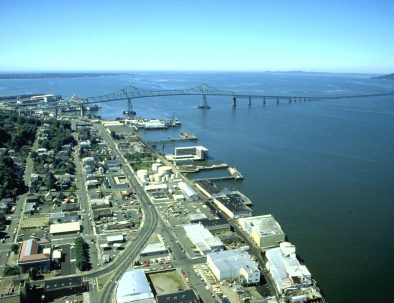
Oregon’s 1st Congressional District includes Clatsop County, Columbia County, Tillamook County, most of Washington County, and part of Multnomah County, including Portland’s west side.
These priorities affect Hillsboro, Beaverton, Tigard, Forest Grove, Astoria, Warrenton, Seaside, Tillamook, St. Helens, Scappoose, Vernonia, Rainier, Clatskanie, west Portland, and communities across northwest Oregon.
An implementation test for ports, landowners, and clean water
A workable federal rule needs more than a new definition. Agencies should publish clear jurisdiction maps, explain how seasonal and connected waters are evaluated, provide a dependable written determination process, and give applicants a practical path to correct an incomplete filing. Public dashboards can show average decision times, pending applications, appeals, and the kinds of projects most often delayed.
For ports and local governments, implementation should also separate routine maintenance from expansion while preserving enforceable protections for navigable waters and documented downstream effects. Applicants need one accountable federal contact, written reasons for a decision, and a review timeline that does not change without notice. Communities need comparable water-quality measures so faster decisions can be judged against real environmental results.
That creates a straightforward public test: are decisions clearer, faster, and consistent across similar projects, and are protected waters measurably better off? If the answer is no, Congress and the responsible agencies should publish the gap, identify the corrective step, and report progress on a fixed schedule.
Related visual context
Source-credited images connected to the article’s policy, geography, or public-accountability themes.